Sharon Smith: The view from my prison classroom window
On Monday nights I teach Modern American Literature at the Thumb Correctional Facility, a Level II prison for men in Lapeer. Through Mott Community College and Ferris State University, the Second Chance program gives inmates an opportunity to pursue a college education, with the goal of reducing recidivism.
Research shows that inmates who participate in an educational program have 43% lower odds of returning to prison, according to the U.S. Department of Justice. I have been teaching at the facility for several semesters. When the opportunity was first presented, I was intrigued, but scared. Who would I be teaching? Murderers? Drug dealers? Thieves? I didn’t know what they did to land there, nor did I know them as people.
I soon discovered that the prisoners are not as scary as I thought. The men who enter this college program are highly motivated and have demonstrated good behavior. I cannot excuse what they have done, but I have come to know them as individuals, each with his own story, genuinely trying to change for the better.
Last week, four men who had been students in previous semesters received permission to start attending the class again, just for fun. This struck me as funny, since usually at the beginning of a semester, the students do not like the class or the literature I cover. They typically don’t understand it, nor is it always easy to read.
But as the semester progresses and they catch on, they start to see the value of literature. They see the truth in what F. Scott Fitzgerald said: “That is part of the beauty of all literature. You discover that your longings are universal longings, that you’re not lonely and isolated from anyone. You belong.”
In prison, where isolation is part of daily life, that discovery can mean a great deal. Literature introduces us to people whose circumstances may be entirely different from our own, yet whose fears, hopes, disappointments, and longings we recognize. The men notice that in nonfiction, short stories, and poems, even when characters are in vastly different situations, there are commonalities in the human experience.
And they wanted more, so they are back, just for fun. In my classroom on the second floor of the education building, I can see the razor wire and fencing throughout the prison yard. One spiral of razor wire goes right past my classroom window. This summer, I noticed sparrows flitting in and out of the razor wire, effortlessly avoiding the edges and darting in for safety when a hawk’s shadow circled overhead. The birds could come and go as they pleased, but the men in my classroom could not. Still, we could read about lives beyond our own and discover how much of the human experience we share.
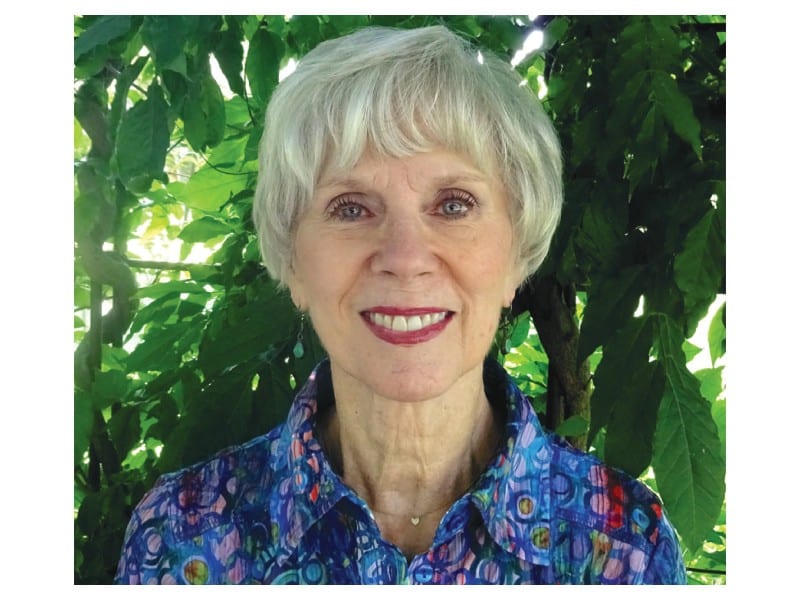
— The Rev. Sharon Smith is pastor at St. Paul’s Lutheran Church and college instructor who preaches the Gospel, teaches writing and literature, and often discovers that her students understand a text better than she does.
Author