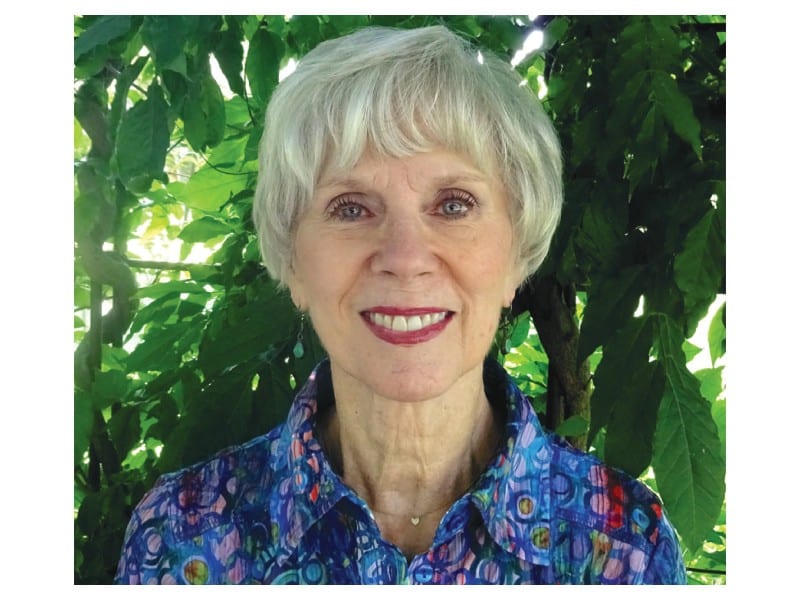
Rick Liblong: Michigan’s spectacular fall show
It’s October again. Time for Michigan’s annual “fall spectacular,” the turning of the leaves. I live in Virginia now and leaves turn colors here also, a little later, but not nearly as well, spectacular as in my beloved home state.
I used to take a walk in the woods with my grandfather or drive around the local area and simply marvel at the red, orange, yellow, brown and some still green leaves all around me. Some had already fallen to the ground but most still clung to their branches hoping for another day.
In my early youth in the 1950s we could still rake the leaves, pile them up and burn them. It was a practice banned later as too dangerous, but I can still conjure up in my mind that distinct aroma of burning leaves signifying that fall had arrived.
One October, my friend Nelson Schluessler, a private pilot, and I flew a Cessna 150 from Romeo (MI) Airport to Mackinac Island. From about the center of the lower peninsula all the way to Mackinac was almost solid timber. From the air the views were beyond description as the canopy of trees below were at their peak in color.
The downside, of course, is that, yes, they would all fall to the ground and I’d have to rake them up and winter, a season I hate, would soon appear. But the show that Mother Nature treated us to every year was worth the wait and whatever followed the show.
Another tradition was that WJR radio announcer, Ted Strasser, would recite what he called “The Conversation of the Leaves.” I think you can still find a recording of Strasser’s work online.
It refers to a famous philosophical passage from Chapter 8 of Felix Salten’s 1923 classic book, Bambi, a Life in the Woods, where the last two remaining autumn leaves on a high oak branch talk about life, aging, and the unknown future. Their conversation serves as a profound metaphor for human aging, mortality, and grief.
Here it is, in part:
The leaves were falling from the great oak at the meadow’s edge. They were falling from all the trees.
One branch of the oak reached high above the others and stretched far out over the meadow. Two leaves clung to its very tip.
“It isn’t the way it used to be,” said one leaf to the other.
“Can it be true,” said the first leaf, “can it really be true, that others come to take our places when we’re gone and after them still others, and more and more?”
“It is really true,” whispered the second leaf. “We can’t even begin to imagine it, it’s beyond our powers.”
“It makes me very sad,” added the first leaf.
The second leaf asked, “Do we feel anything, do we know anything about ourselves when we’re down there?”
The first leaf answered, “Who knows? Not one of all those down there has ever come back to tell us about it.”
“We shouldn’t complain,” said the first leaf gently. “We’ve outlived many, many others.”
“Have I changed much?” asked the second leaf shyly but determinedly.
“Not in the least,” the first leaf assured her. “You only think so because I’ve got to be so yellow and ugly. But it’s different in your case.”
Then they were both silent. Hours passed.
A moist wind blew, cold and hostile, through the treetops.
“Ah, now,” said the second leaf, “I …” Then her voice broke off. She was torn from her place and spun down.
Winter had come.
So, wherever you are, stop, look around, breathe deeply and enjoy the dazzling display of the fall colors, nature’s spectacular show! It’s free!