
New cell phone policy to be implemented
ICS school board approves changes after book study
Editor’s note: The following article was submitted by Imlay City Schools Superintendent Stu Cameron regarding a new cell phone use policy in the district. The new guidelines take effect this year.
IMLAY CITY — In order to support the learning, growth and well-being of Imlay City students, the district is implementing a new cell phone policy beginning on the first day of the 2025-2026 school year.
Specifically, ICS students will no longer be permitted to use cell phones or “smart watches” in classrooms or during instructional time throughout the school day.
This policy has been adopted after careful consideration of current research on child development, student mental health and academic performance, as well as feedback from educators, families and mental health professionals.
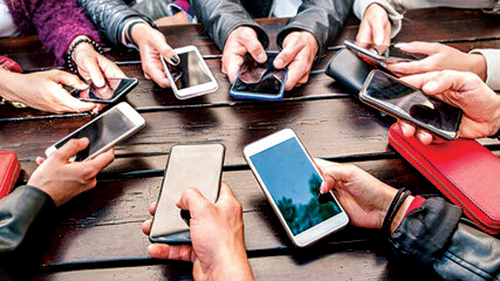
Over the course of the last year, district leaders took time to research the topic, and engage in numerous thoughtful discussions with educators and families, including the ICS Board of Education, ICS Safety Committe and ICS administrators.
Discussions revolved around the effects of cell phone, social media and internet use on children.
In addition to the insightful feedback of those groups, district leaders wanted to craft a policy that is strongly supported by recent research about child development.
Much of this research is shared in Jonathan Haidt’s new book, The Anxious Generation.
Board members, administrators and others conducted a year-long book study examining Haidt’s findings and recommendations.
In his writing, Haidt explains how increased screen time, especially through smartphones and social media, has contributed to rising levels of anxiety, distraction and emotional struggles in children over the past decade.
Haidt presents compelling evidence that the dramatic increase in smartphone and social media use among youth – what he calls the “great rewiring” – has had profound and often harmful effects on adolescents.
His research demonstrates how constant access to smartphones disrupts attention, increases anxiety and interferes with healthy social and emotional development.
He emphasizes that children and teens need environments rich in face-to-face interaction, free from the persistent pull of digital distraction.
Young children especially benefit from screen-free environments where they can focus, play, connect with peers and build important life skills.
Elementary school is a time for discovery, creativity and real-life friendships, rather than virtual interactions – and we believe our school day should reflect that.
In both elementary and secondary schools, this means creating learning spaces where students are fully present, able to engage deeply with their peers, teachers and course material in order to develop positive relational, work and academic skills.
Based on research, we believe this policy will help our students:
•Stay focused in class and get the most out of their learning.
•Build stronger friendships through face-to-face play and conversation and interaction.
•Protect their mental and emotional well-being during these crucial years of development.
By restricting cell phone use during instructional time, we aim to:
•Promote Focus and Academic Success: Reducing distractions helps students concentrate on lessons and improves their ability to retain information.
•Support Mental Health: Studies referenced in The Anxious Generation link excessive screen time with rising rates of anxiety, depression and loneliness among youth.
•Encourage Healthy Social Interaction: Removing phones allows students to build stronger interpersonal relationships and develop communication skills in a real-world setting.
While this policy is aimed at reducing screen time and its demonstrated negative effects, the policy will be implemented a bit differently, as is appropriate, at each age level.
It is our strong recommendation that elementary students not be sent to school with a cell phone or smart watch, and that older children power off devices and store them during the school day.
We do, however, understand that some families may want their children – particularly their older children at the middle and high school levels – to have access to phones before and after school for safety and coordination of transportation or other out-of-school family communications.
For this reason, students may bring phones to school, but they must be handled according to the policy described above (powered off, stored in backpacks, lockers or in the care of the homeroom teacher for the day, and only otherwise accessed as permitted by school officials.
We also understand that teaching students about responsible time management and the appropriate use of cell phones in formal settings such as school and workplaces are valuable lessons.
We know that high school students in particular have an increased need to communicate with parents, coaches, employers, etc. about after school events, transportation and schedule changes.
As such, ICHS students only will be allowed to access and use cell phones during their scheduled lunch periods for these purposes.
Otherwise, cell phones are expected to be powered off and stored the rest of the instructional day.
As a reminder to families, every classroom in the building has its own dedicated phone for use in case of a classroom or building emergency, and if necessary, students may request the use of the office phone for important communications with parents during school hours when students are on scheduled breaks, as has been our building practice for years.
We appreciate our partnership with, and the support of, parents as we implement this important step to support the overall well-being and success of our students.
If you have questions about the policy or would like to learn more about the research behind it, I encourage you to explore The Anxious Generation or reach out to your school’s administration.
Together, we can ensure that our schools remain places where students can thrive – academically, socially and emotionally.
We believe that this will be one important step in doing so.
Related Articles

Eastern Michigan State Fair opens gates Tuesday
IMLAY CITY — The annual Eastern Michigan State Fair is putting the finishing touches on the grounds and buildings, getting them in prime shape prior to gates opening on the 2026 fair.

Main Street work in Capac to begin
CAPAC — For motorists who routinely drive through Capac to go to work or to Metro Detroit, you might want to find an alternate route.

Two Imlay City businesses closing
IMLAY CITY — Two Imlay City businesses have announced they will be closing their doors in the coming weeks.