Goodland Twp. volunteers join effort to restore veterans’ headstone
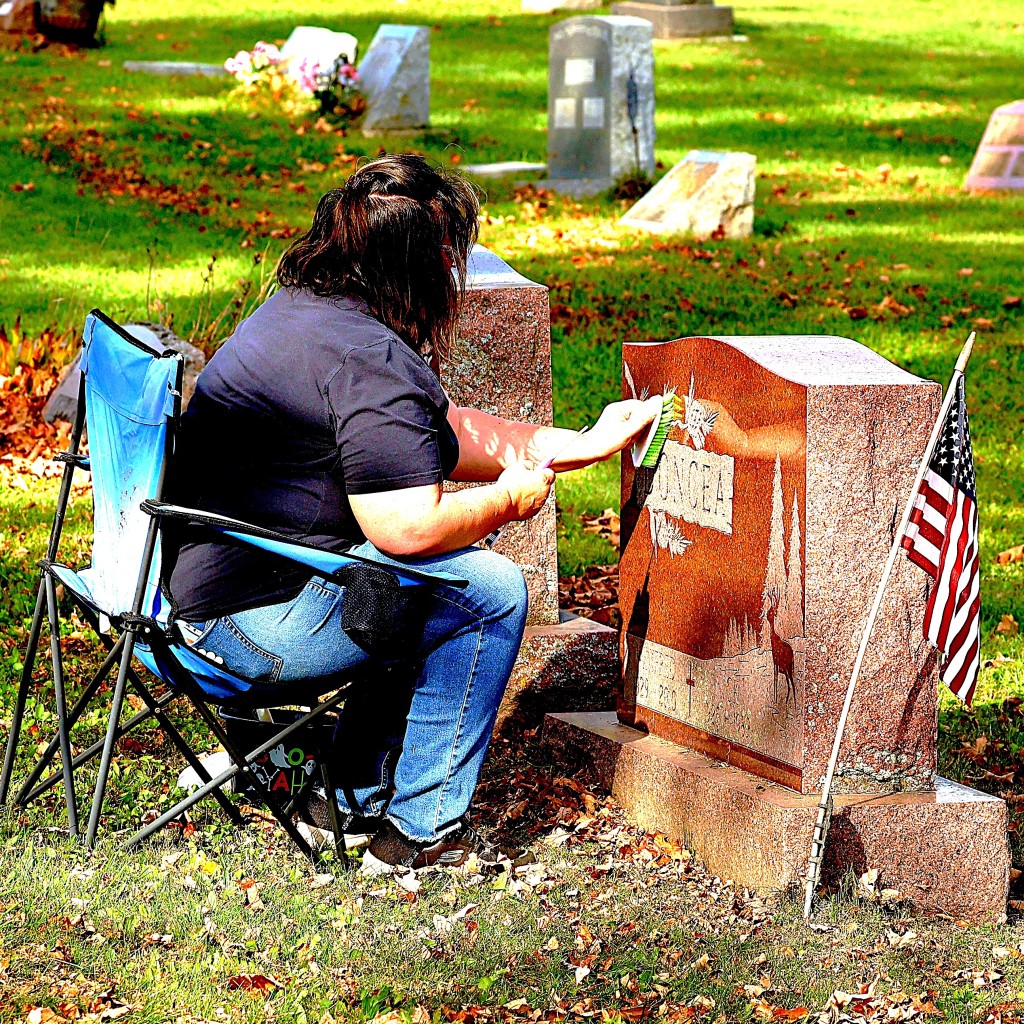
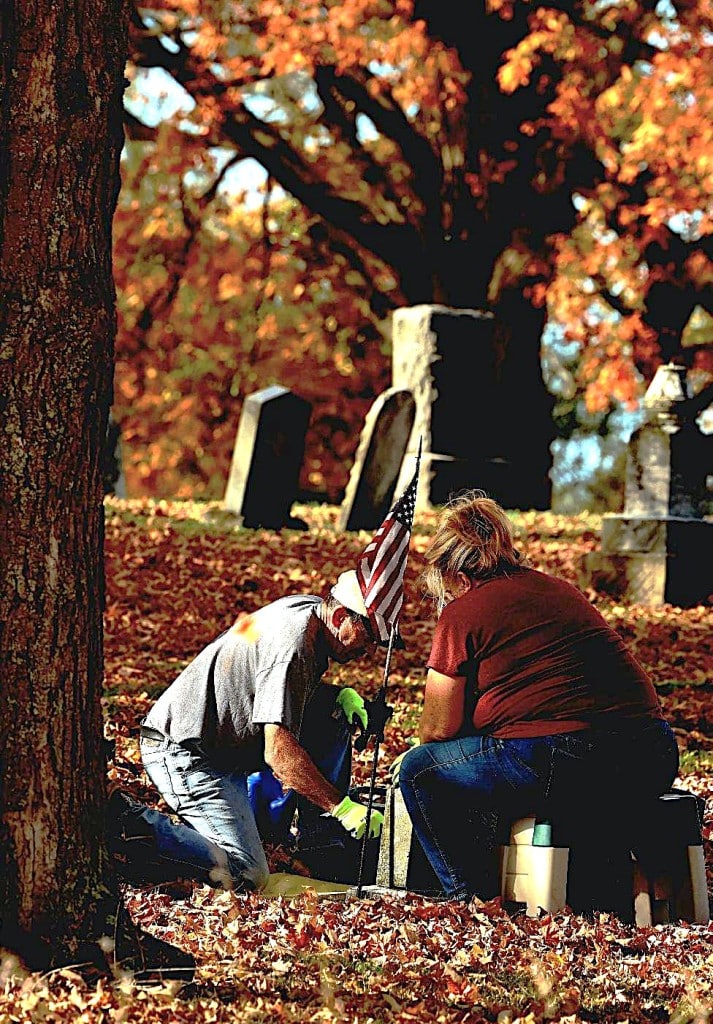
GOODLAND TWP. — Volunteers gathered at Goodland Township’s cemetery last week to donate their time cleaning the headstones of military veterans.
The project is part of a broader vision by the Lapeer County Genealogical Society, which hopes to clean 250 veterans’ headstones for the U.S. semiquincentennial.
For eight years prior to the COVID-19 pandemic, the society organized headstone cleaning efforts. To assist this year, Goodland Township officials organized a group of volunteers to clear headstones of dirt, algae and mold under near-perfect fall weather.
“We have had wonderful success this year. We wanted to do something special for the 250th birthday of our country and it seemed like the right thing,” said Rhonda Wickham, with the Genealogical Society. “We have been able to do 12 of 18 townships in the county, including the city of Lapeer. Our volunteers have been wonderful, and many have commented how humbled they were to have the opportunity to care for headstones of veterans.”
Wickham said they have reached about 96% of their 250-headstone goal.
Headstone cleaning ‘do’s and don’ts’
Cleaning historic headstones requires gentle, specialized care to avoid permanent stone damage, according to experienced monument restorers.
Experts recommend starting with mild soaps like dish liquid or car shampoo, applied using soft nylon or dish brushes — or a toothbrush for tight crevices. Harsh tools like wire or stiff tile brushes, as well as acidic or corrosive household chemicals like vinegar and bleach, should never be used.
To tackle tough black mold or lichen, noncaustic specialty treatments such as Wet & Forget and D/2 Biological Solution — the latter approved for use at Arlington National Cemetery — are preferred over harsh chemicals. While these products can be costly and D/2 often requires ordering online, they effectively kill biological growth without degrading the stone. Cleaners can either scrub gently for immediate results or simply spray the formula and allow rain and weather to wash away the dead mold over several months, a process that frequently requires multiple visits.