
Uncertain future for Capac FFA program after teacher resignations
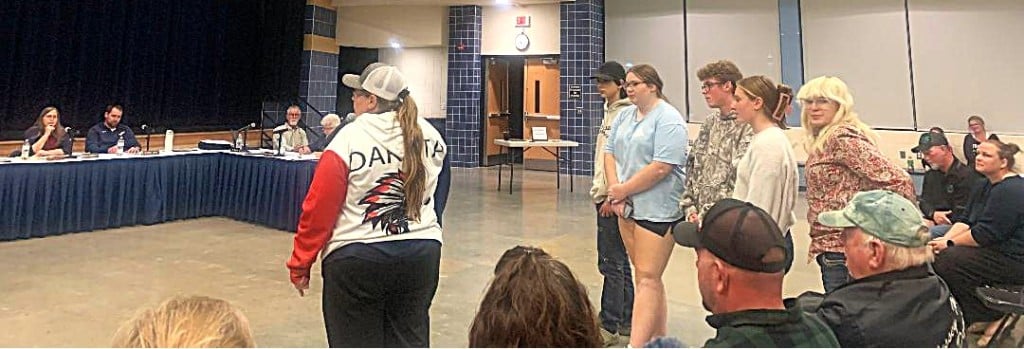
CAPAC — Concerned parents, students and local farmers spoke up at last week’s Capac School Board meeting on Tuesday, Oct. 20, regarding the uncertain future of its longstanding and highly successful FFA program.
The program has been without a teacher for the majority of this fall semester following an untimely resignation. Former Agricultural Science teacher and FFA advisor Travis Fahley left the Capac program to work for St. Clair County Community College, which is starting a similar agricultural program for college-age students.
A replacement was hired but has since resigned. During public comment, speakers voiced frustration with a lack of communication while emphasizing the merits of Capac’s FFA program and the cost of losing it.
Dale Stuever, a local farmer and former board member, urged the board to take action.
“It’s really been a great success and I don’t want that to stop,” he said. “We’ve got way too many people invested in … a lot of the community really supports it.”
Stuever also spoke on the importance of hiring a barn superintendent, noting the extra effort required to maintain and prepare animals for competition.
“It’s not just a job where you’re feeding the animals twice a day. These show animals get into a fair that’s very competitive, and they don’t get fed the same things … It’s not a simple project,” Stuever said. “We want the kids to be cleaning the barn and everything, but they also need to have somebody ahead of them that they respect.”
Shannon James, a local resident, noted that Capac is “the only school in St. Clair County that has a dedicated FFA program” and that FFA has become the school’s niche.
Another concerned resident added: “We are special because we have FFA.”
A resident stepped to the podium and invited current Ag Science students, including her daughter, to stand with her.
“We need more parent involvement, more of your [the board’s] involvement; talking to us parents,” she said, pointing to the students. “You need to listen to these guys more. … You want to know what’s going on in your classrooms? Talk to these kids.”
Danielle Camire, a local resident with a son in the program, raised concerns about Career and Technical Education classes for the agricultural program and the plan moving forward.
“We, as a school district, decided to implement this program, so we, as a school district, need to be promoting, assessing and working toward a resolution,” Camire said. She then posed a series of questions to the board about next steps if a replacement is found or if the program is canceled outright.
“If we have to cancel the program, where does that leave them? Are we just shoving them in classes … making something else up for them? … I would also, as a parent, like communication especially to the parents of a CTE student … Some type of communication from someone would be wonderful for us parents.”
Board member Beverley Wheelihan offered reassurance from the district.
“We put in our bond to build the barn, we support it as a board, and we support it as a community,” Wheelihan said. “The administration also supports the program, and we intend to keep the program, expand the program and continue to promote it.”
Emma Gilman, a junior and FFA secretary, detailed how the vacancy impacts students.
“I think Capac can really benefit from the FFA program because a lot of kids … wanted to take the CTE program and now we can’t; we don’t have enough opportunity to,” Gilman said. “A lot of our kids want to learn, and we can’t because we have no teacher.”
Brooke Stockdale, a junior and FFA president, spoke about the program’s personal impact.
“[It] really changed my path in life that I wanted to go into. … Once I got involved in the agriculture world, I really wanted to stay in it and get a job in it,” Stockdale said.
Fahley, the previous Ag Science teacher, FFA advisor and summer barn manager, also addressed the board to reiterate community concerns.
“One of the benefits of a small school is that we should all know each other and … have these casual conversations, and I respect the fact that along the way decisions just have to be made,” Fahley said. “But sometimes you need somebody else’s perspective. … Unfortunately, I think way too often, because people are overworked here and trying to do too much with too little — a common problem among all schools — is that decisions are just being made randomly without taking the time to put the work into it. It’s not easy; I’ll be the first to admit. But nothing worth the work is easy.”
Following the recent death of a former FFA staff member and the resignation of a newly hired replacement, the program remains without a teacher and parents report a lack of communication from administration.