Area raked by heavy thunderstorm and hail
CAPAC — A severe thunderstorm rolled through the Tri-City Times coverage area last Thursday afternoon, causing flooding rains and destruction of some trees…
Capac area sustains worst of the damage
CAPAC — A severe thunderstorm rolled through the Tri-City Times coverage area last Thursday afternoon, causing flooding rains and destruction of some trees and farm crops.

While the Imlay City area sustained pea-sized hail along with thunderstorms, just east of town, along an area of Imlay City Rd. east to Capac, the hail grew in diameter, in some cases up to golf ball sized.

Following the storm, residents came out to inspect the damage to their trees, vehicles, roofs, siding along with some crop fields.

One family in Mussey reported damage so severe to their home they have to have a roof and siding replaced, along with vehicles receiving extensive damage.

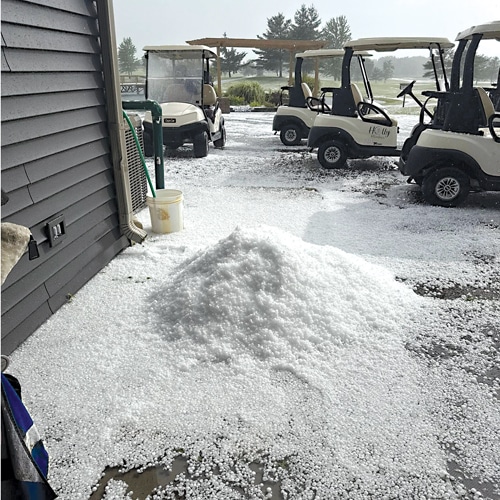
Holly Meadows Golf Course sustained heavy tree damage when hail shredded leaves from branches along with a light coating of hail across grassy surfaces.
Just a few miles either way from Capac, north or south, there was little to no damage from hail.
The storm traveled to Port Huron and then into Canada where it spawned a tornado.
Damage to young corn plants was obvious throughout the area. Damage after such a storm can be one of the most disheartening feelings in the world to a corn grower. Ag experts say the challenge is to separate emotion from reality when assessing actual damage to plants and estimating recovery of a hail-damaged field.
Purdue University experts say yield loss in corn due to hail damage results primarily from stand reduction caused by plant death and leaf area reduction caused by hail damage to the leaves. Assessing the yield consequences of hail damage in corn therefore requires that the severity of each of these factors be estimated.
As with most early-season problems, evaluation of hail-damaged fields should not be attempted the day after the storm occurs because it can be very difficult to predict survivability of damaged plants by simply looking at the damage itself.
Young corn has an amazing capacity to recover from early season damage but patience is required to allow the damaged plants enough time to visibly demonstrate whether they will recover or not.
Damaged but viable plants will usually show noticeable recovery from the whorl within three to five days with favorable weather and moisture conditions.
Yield loss in corn is not directly proportional to the reduction in the number of plants per acre when the damage occurs early in the growing season. The surviving plants that surround a missing plant compensate by increasing their potential kernel numbers or by developing a second ear.
Experts say leaf damage by hail usually looks worse than it really is. Tattered leaves that remain green and connected to the plant will continue to photosynthesize.
The effects of leaf death on yield increases as the plants near silking, and then decreases throughout grain fill.
Therefore, the grower needs to determine the leaf stage of the crop when the hail damage occurred. This can be challenging depending on the severity of the damage to the plants by the hail.